Definition: Self-consumption solar is designed to prioritize supplying generated power to on-site electricity demand rather than selling it to the grid. The appropriate installed capacity is calculated from 30-minute interval demand data (when and how much electricity is used) and time-of-use electricity rates. In facilities with large refrigeration and air-conditioning loads, the overlap between the generation curve and demand peaks determines the economics.
[Please note the system revision in April 2027] From contract applications for grid interconnection made on or after April 2027 (October of the same year for low-voltage systems under 50 kW), the system is being revised so that JC-STAR★1 certified products will be required for PCS and related equipment. Projects for which the interconnection contract application was formally accepted before the revision takes effect may continue under the pre-revision requirements, and equipment can be selected freely.See here for a summary of deadlines and procedures.
Warehouse self-consumption solar PV | Factory and refrigerated warehouse sites nationwide | Capacity determined from 30-minute data
For self-consumption solar in warehouses, capacity is determined not by roof size, but by the daytime demand from material handling, refrigeration, and lighting. Factory roofs and refrigerated warehouses are handled through the same contact point, with nationwide support. The one-line conclusion on orientation, cost, and reverse power flow prevention is organized in the practical checklist for factories.
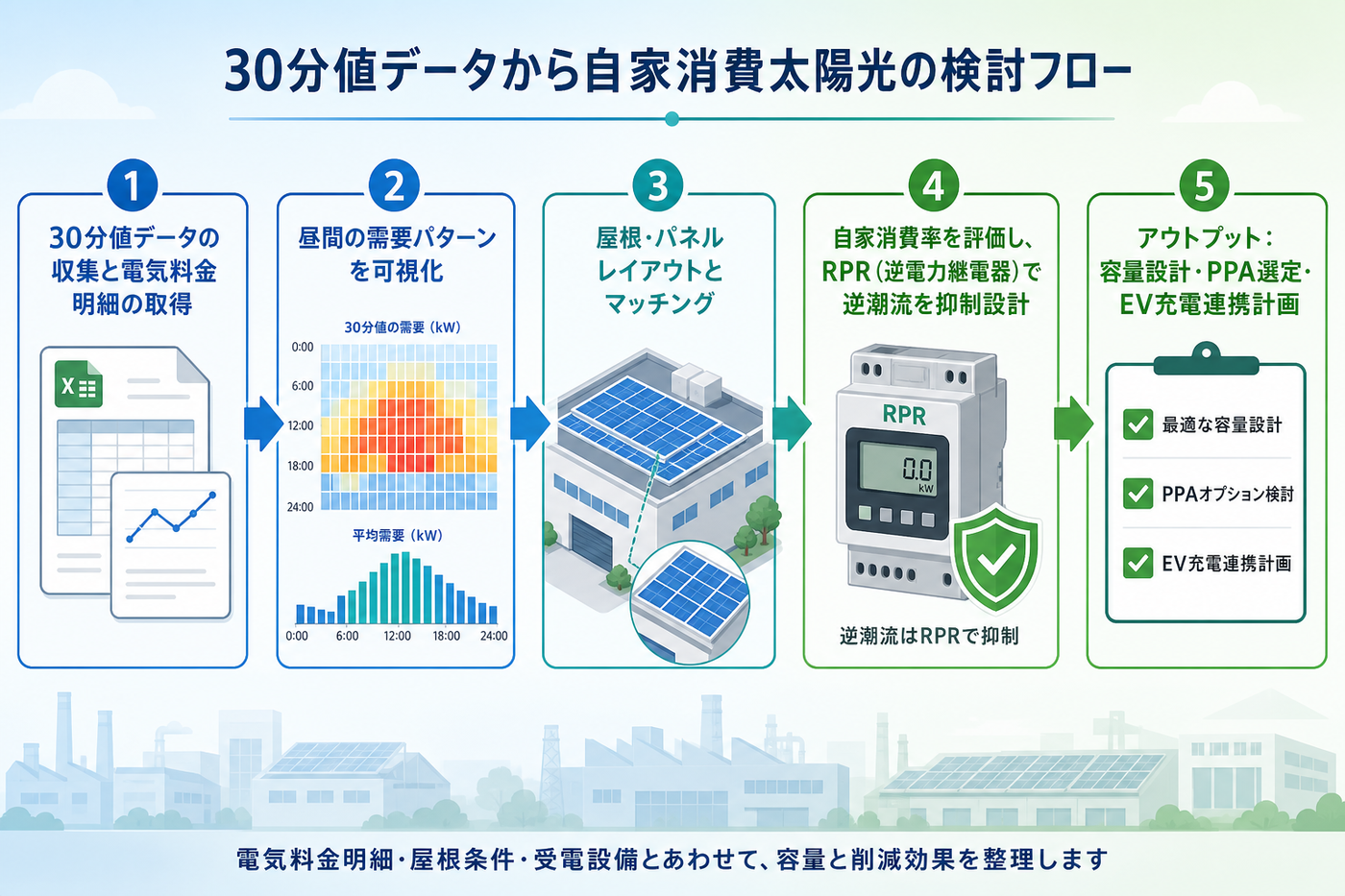
Design points: To maximize the self-consumption ratio, determine the installed kW based on the "upper limit of demand" rather than the "upper limit of roof area." If you have 30-minute interval CSV data and electricity bill details, you can quantify peak demand, base load, and seasonal variation, and calculate the appropriate capacity while suppressing oversizing (excess feed-in). SolarEdge MLPE enables module-level optimization even on roofs with shading.
Self-consumption FAQ · 200 kW installation case study · How to read 30-minute interval data · LP for food factories and refrigerated warehouses
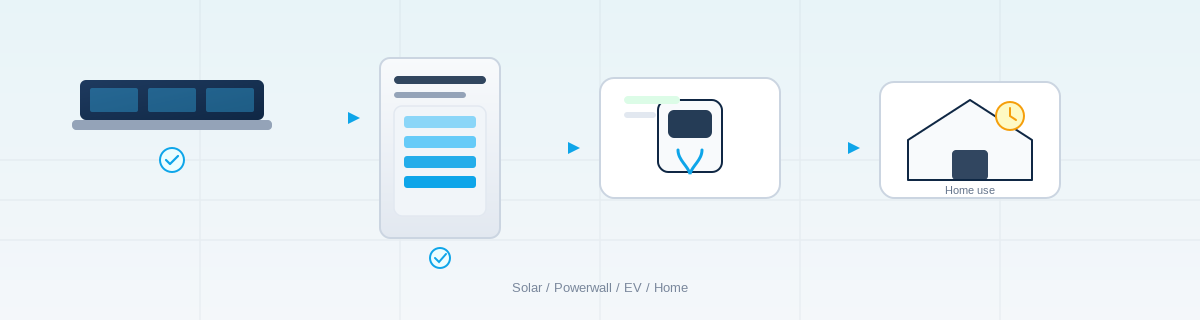
Tesla Powerwall
In addition to solar power generation, Powerwall can also be installed.
At I-S3, we also handle Tesla Powerwall installation. It stores generation that exceeds daytime self-consumption and can be used for nighttime loads, EV charging, and backup during power outages. For product details, please visit Tesla's official website.
Go to the official Powerwall pageReasons I-S3 is chosen compared with other companies' factory solar and subsidy proposals
Compared with other companies that emphasize price, subsidies, and construction track record, I-S3 highlights verified facts such as nationwide support, 30-minute interval analysis, actual electricity cost reductions, and integrated operation.
| Common claims seen from other companies | I-S3's response (fact-based) |
|---|---|
| Free estimate and subsidy utilization | Using 30-minute interval data, electricity bill details, and roof photos, AI chat provides a preliminary estimate of costs and expected savings in advance. Subsidies are introduced when conditions allow. |
| Many construction projects completed | There are many cases in Gunma Prefecture and nearby areas. For factories operating during the day, solar can cover most of the electricity bill, and in some cases nearly 100%; there are also anonymous cases of net negative costs at small offices in Saitama (effects vary depending on conditions). |
| Coverage area listed | Self-consumption solar and repowering are available nationwide. 30-minute interval analysis can be reviewed remotely for projects across Japan. |
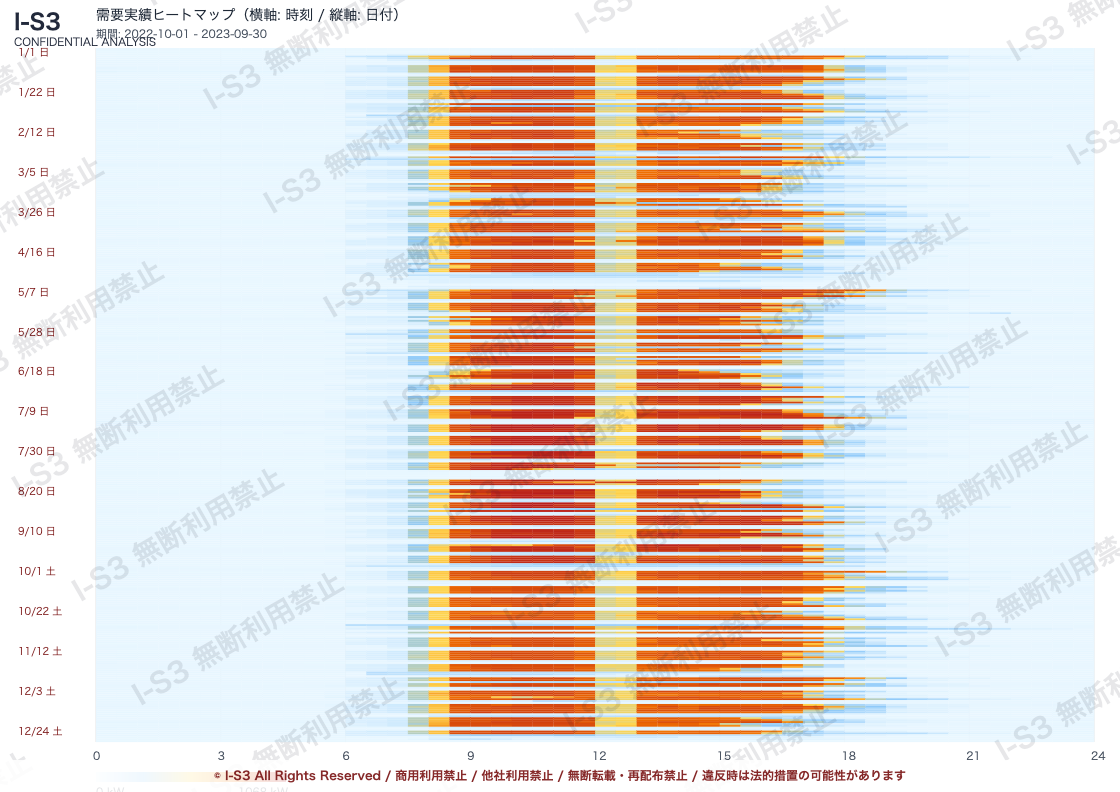
| Reduction simulation | We visualize 30-minute interval data with a demand heatmap and estimate the self-consumption ratio and reduction effect from "when and how much is used." Reverse power flow prevention, on-site PPA, and use of reused PV modules can also be discussed. |
| Standalone solar PV installation | From EV charging to O&M and repowering, integrated operation by one company. You can consult us with a view to improving power generation and maintenance after installation. |
AI CHAT FIRST
Collecting 30-minute interval data, electricity bill details, and roof photos in chat makes it easier to move the review forward.
For self-consumption solar, not only the amount of power generated but also "when electricity is used" is important. If you send 30-minute interval data in chat, a demand heatmap will show the annual pattern, and we can improve the accuracy of the review by combining it with facility use, location, electricity contract, and roof photos.
SOLAR CHAT CAMPAIGN
Start the initial assessment of electricity cost reduction by chat
You can also consult us about on-site PPA and used PV module utilization to reduce initial costs
Self-consumption solar PV is not limited to a model in which you purchase the equipment yourself. If conditions are suitable, I-S3 or a partner company can bear the equipment costs, and you pay a usage fee for the electricity generated, in the form of an on-site PPA, allowing you to consider installation with lower initial costs.
In addition, by utilizing reused and used PV modules, it may be possible to reduce the initial cost required to obtain the same power output. Covering a large roof area with modules may also help reduce the load on summer air conditioning and refrigeration equipment, so we check not only the amount of power generated but also the building's electricity load.
What can be checked during evaluation
- Target: Facilities that use electricity during the day, such as factories, warehouses, stores, offices, welfare facilities, and businesses that provide EV charging.
- Scope: self-consumption solar PV and repowering are available nationwide.
- Track record: In addition to the reference cases posted here, there are many unpublished self-consumption solar PV cases in Gunma Prefecture and nearby prefectures.
- Effect: The reduction rate varies greatly depending on the type of business, roof area, and operating hours. In factories that operate only during the day, it may be possible to cover most of the electricity cost, and in some cases nearly 100%. In an anonymous case of a small office in Saitama Prefecture, about 65% of the electricity used was self-consumed, and when surplus feed-in revenue was included, the electricity cost burden became effectively negative. However, the effect varies depending on the conditions.
- How to consider it: If you have 30-minute interval data, electricity bill details, and photos of the roof and receiving equipment, it becomes easier to concretely review the preliminary cost and expected savings. The final design and estimate decision is made after on-site confirmation.
- How to proceed within the company: Before internal review and approval, you can organize the preliminary estimate, expected savings, required materials, and items to confirm before the site survey.
- How to proceed: This is suitable for businesses that want to make a rational decision not only by comparing prices, but also by considering the time required for staff attendance, the effort of the site survey, and post-installation operation.
Many additional cases not listed and how to view the reduction effects
- Factories and businesses / Kanto area and nearby regions (details not disclosed) / Confirmation materials: 30-minute interval data, receiving equipment, roof / Effect concept: Improve the self-consumption rate to match daytime demand (varies depending on conditions)
- Small office / Saitama Prefecture (anonymous) / Confirmation materials: bill details, daytime demand, roof / Effect concept: A case in which about 65% self-consumption plus surplus feed-in was organized to an effectively negative burden level (no guarantee)
- Food factory and refrigerated warehouse / Nationwide support / Confirmation materials: 30-minute interval data, bill details, photos / Details: LP for cooling-load facilities・200 kW case
Because many self-consumption solar PV projects cannot disclose facility names or detailed conditions, the cases visible on the web do not represent all of our track record. At I-S3, we have many projects not only in Gunma Prefecture but also in nearby prefectures, and they are helping reduce electricity costs in line with each facility's demand pattern.
- Factories and businesses operating only during the day: In some cases, almost all daytime demand can be covered by solar power, resulting in nearly 100% reduction
- Refrigerated warehouses, food processing, and similar operations: highly effective for businesses where power peaks concentrate during summer daytime hours, even with 24-hour operation
- Facilities with large contracted demand and a high share of basic charges (reducing peak demand also lowers the basic charge)
- Roof and open-site area are sufficient to install many panels
- High electricity unit rates (high-voltage contracts, or periods with large fuel cost adjustment charges)
- 30-minute interval data (daily and hourly demand patterns)
- Electricity bill details and contracted demand
- Photos of the roof/site orientation, slope, and obstacles
- Condition of the receiving equipment (distribution board and inverter area)
- We review demand data, electricity bill details, roof conditions, and incoming power equipment to organize the installation capacity and the outlook for savings.
- Reduction rates are not determined uniformly; they are considered individually according to daytime demand, contracted power, roof area, and the condition of existing equipment.
- From EV charging, Tesla Powerwall, O&M, repowering, on-site PPA, to reverse power flow prevention, you can consult us on operational improvements rather than individual construction work.
Anonymous case: a small office in Saitama Prefecture
- Facility type
- Small office (B2B)
- Region
- Saitama Prefecture (details undisclosed)
- Issue
- For daytime electricity use, reduce rising electricity costs and future price fluctuation risk
- Considerations
- Electricity bill details, daytime demand, roof conditions, contract terms, handling of surplus power sales
- Purpose of introduction
- About 65% of electricity used was self-consumed, and including surplus power sales revenue, the electricity cost burden was organized to an effectively negative level (varies depending on conditions)
At a small office in Saitama Prefecture, there is a case where self-consumption solar PV covered about 65% of the facility's electricity use through on-site self-consumption, and including revenue from surplus power sales, the electricity cost burden became effectively negative. The facility name and detailed conditions are not disclosed, but this was a case reviewed by combining daytime electricity use, roof conditions, contract details, and how surplus power sales were handled.
The above is an individual case and does not guarantee the same reduction effect. The installation effect varies depending on the business type, operating hours, roof area, power contract, electricity unit price, power sales conditions, and system capacity. If 30-minute interval data, electricity bill details, and photos of the roof and receiving equipment are available, we can organize the outlook with greater accuracy.
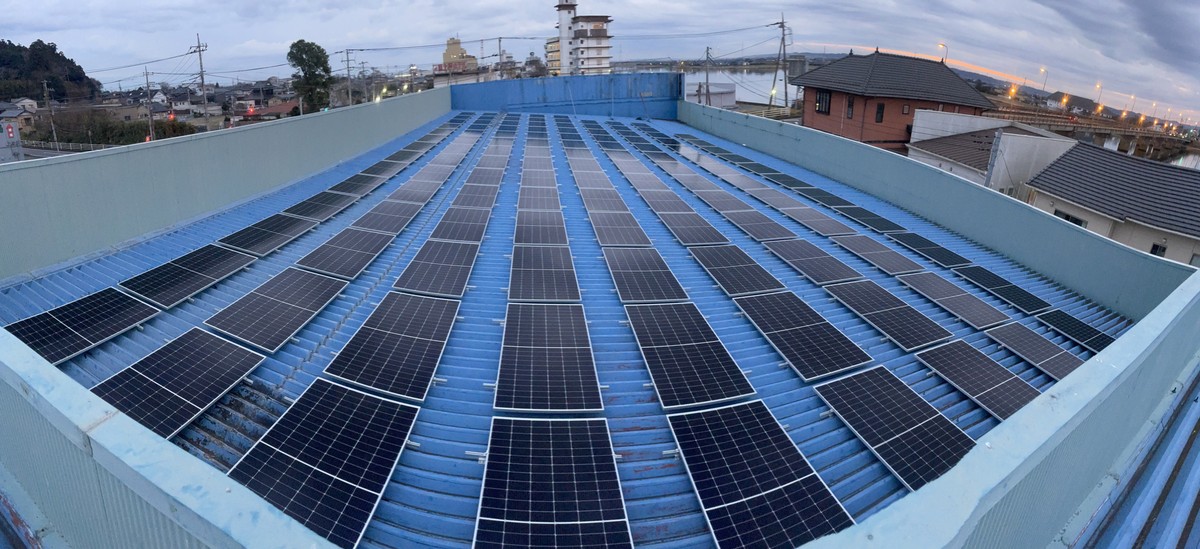
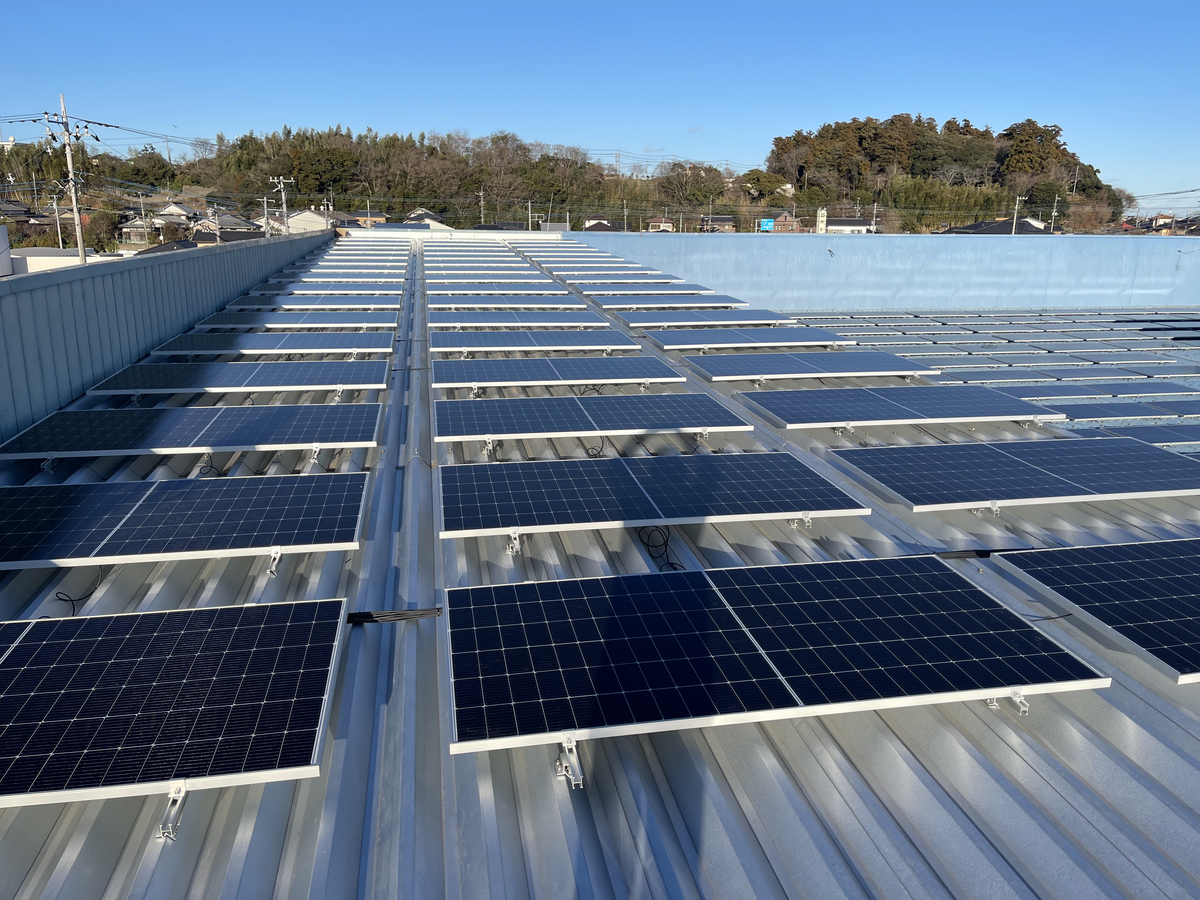
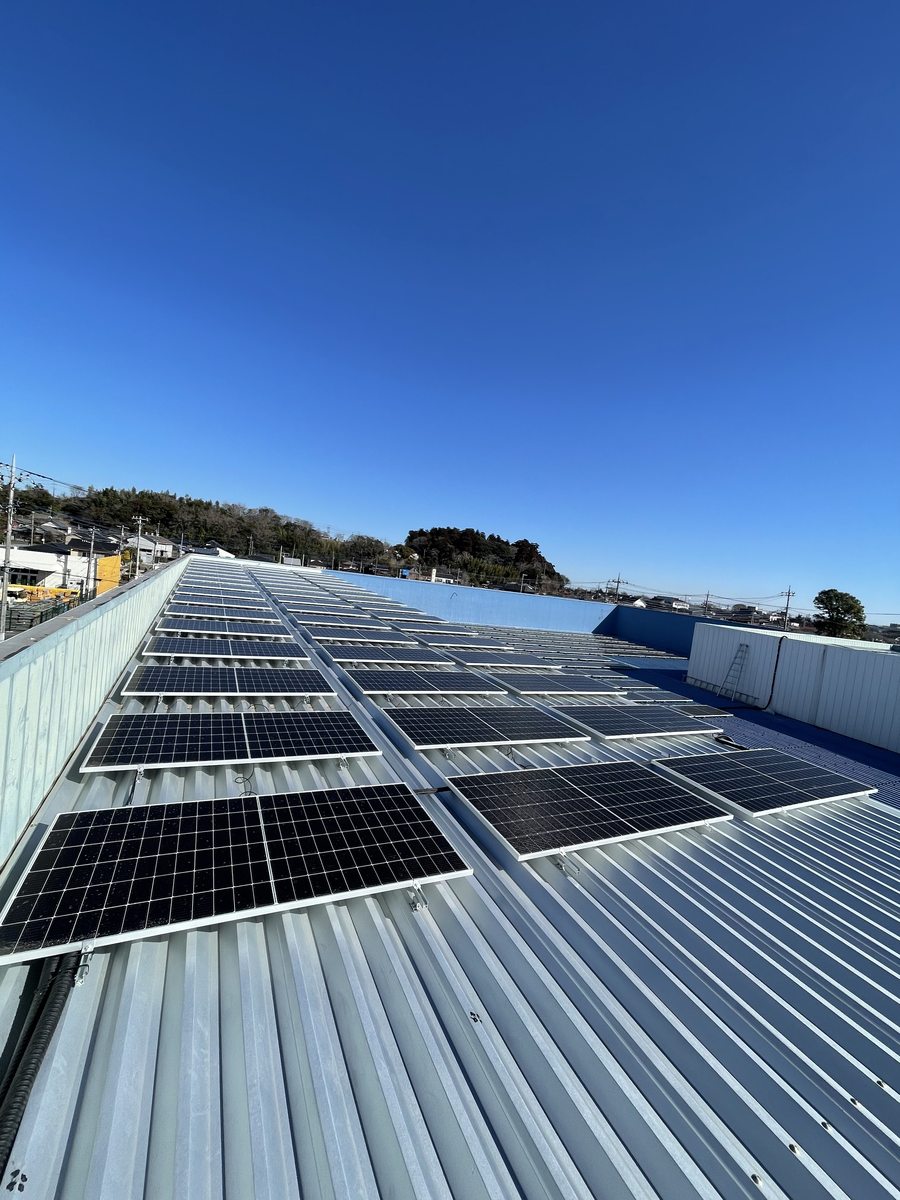
Here, we have selected photos that make it easy to show the overall roof view and panel layout. In individual projects, we combine roof orientation, slope, obstacles, receiving equipment, and 30-minute interval data to check not only the power generation amount but also how much can be self-consumed.
1. Why self-consumption now?
We are moving from an era centered on FIT power sales to an era in which the electricity generated is used at one’s own facility. For facilities with high daytime electricity usage, solar power generation utilizing roofs and vacant space may help reduce purchased electricity consumption.
Especially at business sites, rising electricity rates, fuel cost adjustments, and future fluctuations in power prices become management risks. Self-consumption solar can be considered not just an environmental measure, but as a capital investment for cost control and business continuity.
At I-S3, in addition to the cases published within the scope that can be disclosed, we handle multiple self-consumption solar PV projects, including projects in Gunma Prefecture and nearby prefectures. Because electricity usage, contracts, roof conditions, and system capacity differ by facility, the reduction rate is not uniform. In factories that operate only during the day, there are cases where the reduction is nearly 100%. At a small office in Saitama Prefecture, there is an anonymous case where about 65% of electricity use was self-consumed, and including revenue from surplus power sales, the electricity cost burden became effectively negative. Even in 24-hour operations, industries such as refrigerated warehouses, where daytime power peaks are concentrated, can achieve significant reduction effects, and reducing peak demand can also lead to lower basic charges.
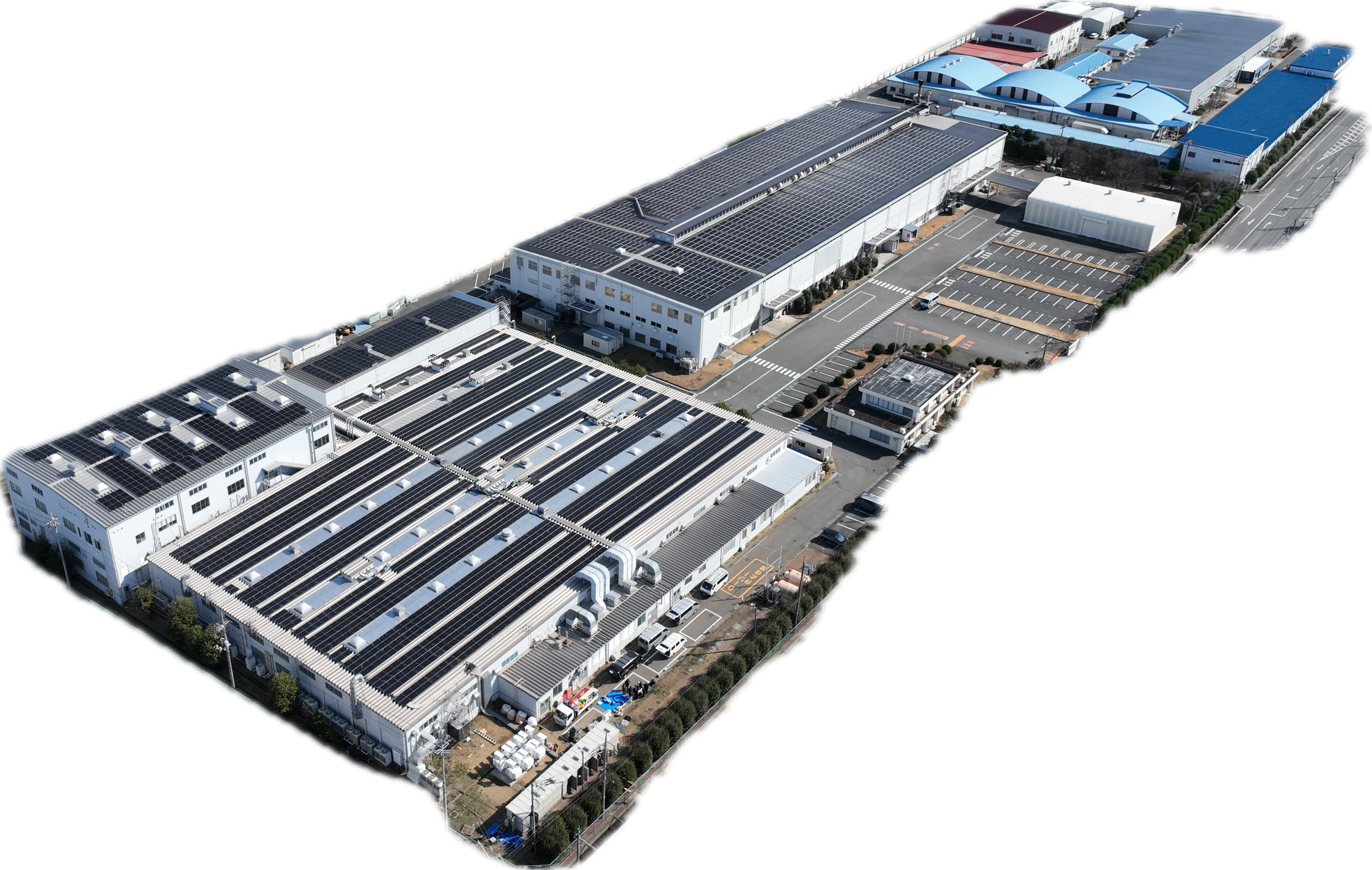
- Facility type
- Factories and business sites (large-scale self-consumption)
- Region
- Kanto area nearby (details undisclosed)
- Issue
- Make use of a large roof area and increase the self-consumption rate to match daytime demand
- Considerations
- 30-minute interval data, receiving equipment, roof shape, reverse power flow conditions, O&M system
- Purpose of introduction
- Installed 600 kW-scale systems at two locations and confirmed the balance between power generation and self-consumption (reference case; results vary depending on conditions)
2. Facilities suitable for considering self-consumption
🏭 Factories and warehouses
If daytime operations are frequent and roof area is easy to secure, it is a facility where the benefits of self-consumption are easier to evaluate.
🏬 Stores and offices
If there is daytime load from air conditioning, lighting, refrigeration, and similar equipment, part of the purchased electricity may be replaced by solar PV.
🚗 Combination with EV charging
If charging for company vehicles, visitors, or employees is done during the day, solar PV and EV charging can be considered together. For nighttime charging or backup in the event of a power outage, you can also consult us about installing battery storage such as Tesla Powerwall as an option. With an AC standard charging network like A-Charge, you can discuss combinations with self-consumption solar or on-site PPA, focusing on charging opportunities during parking time rather than charging volume.
3. How to view case studies within the publicly available scope
Many self-consumption solar PV case studies cannot disclose the facility name or location, so on the page we present the scale and the approach to evaluation within the publicly available scope. In individual evaluations, we organize the installation capacity and outlook for electricity cost reduction based on the facility type, region, demand data, roof conditions, power receiving equipment, and whether there is existing solar PV.
- Facility types: factories, warehouses, stores, offices, welfare facilities, and others
- Reference materials: 30-minute data, electricity bill details, roof and power receiving equipment photos, and information on existing equipment
- Main purposes: reducing electricity costs, lowering exposure to power price fluctuations, combining with EV charging, and making effective use of existing equipment
- Scope: Self-consumption solar PV and repowering projects are available nationwide
We introduce self-consumption examples from a range of sites with different scales and industries, including multiple factories of a major manufacturer, two logistics warehouses, and a food factory at a regional site.
See customer feedback and case study stories4. What you can consult I-S3 about
- Rough study of self-consumption solar PV
- Organizing configurations including reverse power flow prevention
- Consultation on introduction schemes that reduce initial investment, such as on-site PPA
- Combining existing solar PV with self-consumption, repowering, repairs, and inspections
- EV charging equipment, A-Charge, load balancing, and simultaneous consideration of multi-unit installation
Actual feasibility, capacity, and economic viability vary depending on the roof, receiving equipment, demand patterns, electricity contract, and the condition of existing equipment. In the chat, we organize typical approaches, and for individual estimates, a representative will provide guidance based on the information you share.
The fee structure and billing method for A-Charge integration are designed individually based on installation conditions, operating conditions, payment methods, terms of use, and legal compliance checks. This includes pricing designs based on occupancy time and parking time, and the feasibility of introduction and operational effectiveness vary depending on individual conditions.
5. Explainer video: self-consumption at factories and business sites (new)
For management decisions, we have posted a new video explaining the concept of self-consumption solar, considering the appropriate capacity from 30-minute data. By looking at the facility's consumption pattern, roof and site conditions, receiving equipment, contracted power, and future EV charging or equipment expansion, it becomes easier to judge the installation effect.
EVPV Mirai Channel | Watch on this page
The video can be played on this page as is. After reviewing the concept of self-consumption for factories and business sites, please send 30-minute data and photos to the AI chat without moving to YouTube.
Open AI consultation first (recommended)Based on the video content as well, I-S3 accepts consultations on self-consumption systems not only for solar PV intended for selling power, but also for reducing electricity costs, lowering the risk of power price fluctuations, and improving energy operations at business sites.
6. Information that is helpful for an initial estimate
If you have 30-minute data, the AI chat can display a demand heat map and organize demand patterns throughout the year, including daytime peaks, holidays, and seasonal fluctuations. Even if the format differs by utility or retailer in Excel / CSV, it will automatically identify the column order to the extent supported. For an explanation of how to read it, see What you can learn from 30-minute data.
- Facility location, municipality, and facility use (factory, warehouse, store, etc.)
- Photos of the roof, candidate installation locations, around the inverter, and the receiving equipment
- Demand data such as 30-minute interval values that can be obtained from the power company
- Electricity bill details, contracted demand, and annual electricity usage estimates
- Requests for new installation, expansion, repowering, repairs, PPA, and more
Even if all documents are not yet complete, we can start a preliminary estimate review with the minimum necessary information. During weekday business hours, if photos and demand data are available to a certain extent, we may be able to organize the installed capacity, preliminary cost estimate, expected savings, and points to confirm before internal approval on the same day. The AI preliminary estimate is not a substitute for a formal estimate, and the final decision on feasibility, capacity, and economics will be made after an on-site inspection.
7. Related technologies and concepts
At I-S3, we consider configurations suited to each set of conditions, including module-level optimization and monitoring with SolarEdge and others, reuse and second-hand panel utilization, and repowering of existing equipment. Its strength is that it can organize multiple issues together, such as reducing electricity costs at business sites, long-term equipment operation, and combining with EV charging.
If you want to consider analysis from 30-minute data for factories, warehouses, stores, or business sites, please also see the dedicated page Factory self-consumption solar (conditions where capacity and cost change with 30-minute data).
Frequently Asked Questions
What is self-consumption solar PV?
It is a concept of using electricity generated on rooftops or on-site within the facility rather than primarily selling it back to the grid. The aim is to reduce electricity costs and lower the risk of electricity price fluctuations.
What types of facilities is it suitable for?
It is suitable for consideration at factories, warehouses, stores, offices, welfare facilities, and business sites that provide EV charging and use electricity during the day.
Can you also consult with us about food factories and refrigerated warehouses?
You can consult with us. Food factories and refrigerated warehouses with large cooling loads are well suited to 30-minute data analysis, and you can send billing details and photos from the dedicated LP.
Is 30-minute interval analysis for factories available nationwide?
Yes. 30-minute interval analysis for factories and warehouses and self-consumption solar PV are available nationwide. Send Excel/CSV to the chat and we will visualize the demand pattern.
What information is needed for a preliminary estimate consultation?
If we know the location, facility use, photos of the roof and power receiving equipment, electricity bills, 30-minute interval data, and whether existing equipment is in place, it becomes easier to organize the installation capacity, preliminary estimate, and expected savings. The final decision is made after an on-site confirmation.
Is self-consumption solar PV available nationwide?
Yes. Self-consumption solar PV and repowering projects are supported nationwide. Our headquarters is in Annaka City, Gunma Prefecture, but we handle wide-area and nationwide projects by combining our own field deployment capabilities with partner collaboration.
Can you provide a preliminary estimate based on unit price per W or per kW?
We do not provide a uniform unit price per W or per kW. This is because costs can vary greatly even for the same capacity depending on the roof type and mounting structure, the receiving equipment and reverse power flow prevention (RPR) configuration, wiring distance, and grid interconnection procedures. With a uniform unit price, the margin needed to absorb those differences would be added to everyone's price. We determine the configuration for each facility based on 30-minute interval data and site conditions, so we can eliminate unnecessary work and excess capacity and install at the minimum cost required for that facility. If the conditions or region do not match, we may also introduce contractors we recommend or contractors we believe are nearby.
How much can electricity costs be reduced?
The reduction rate varies greatly depending on the business type, roof area, and operating hours. In factories that operate only during the day, cases close to 100% are possible. The effect is checked individually based on 30-minute interval data and electricity bills.
Can I get advice faster than through the inquiry form?
Yes. In chat, AI can read the roof and power receiving equipment photos you send, as well as 30-minute interval data, and organize the installation capacity, preliminary estimate, and expected savings, while also moving on to discussions about site surveys and visit schedules.
What are the strengths compared with other companies' factory solar proposals?
I-S3’s strengths are detailed analysis using 30-minute interval data, nationwide coverage, and integrated operation across EV charging, O&M, and repowering. You can also consult us just to organize the information before getting multiple estimates.
Contact Us
You can start with chat for a preliminary estimate for self-consumption solar PV, checking facility photos, submitting demand data, and discussing the schedule for a site survey.